
Home / Therapies / Hyperbaric oxygen therapy
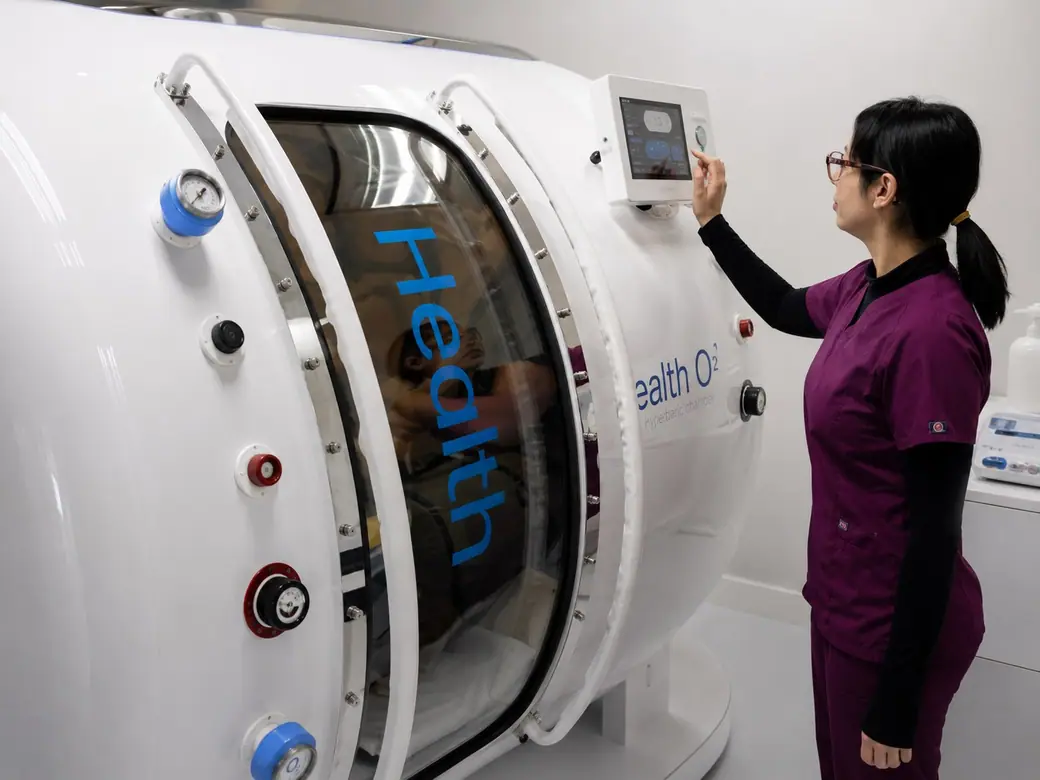
Multiplace chamber · 2 ATA
Hyperbaric oxygen therapy
Pressurized oxygen in a multiplace chamber. Of the clinic therapies, the one with the most published clinical evidence.
- Duration
- 60 to 90 minutes per session
- Format
- Multiplace chamber, up to 2 atmospheres absolute
What it is
You enter a chamber where pressure rises to two atmospheres and you breathe oxygen. With the higher pressure your blood carries more dissolved oxygen than it would under normal conditions, and that oxygen reaches tissue with poor blood supply.
This therapy has had recognized medical indications for decades and established protocols. It is almost always prescribed as a series of sessions rather than a single one, and how many depends on what it is being used for.
What the session is like
- Ears and vital signs checked before you go in.
- Gradual compression, with instructions for equalizing pressure in your ears.
- Treatment time breathing oxygen, seated.
- Gradual decompression and a check on the way out.
Who it is considered for
People inside one of the clinic longevity or recovery protocols, where tissue oxygenation is part of the plan. The usual protocol is 3 to 5 sessions a week, in courses of 20 to 40 sessions. Hospital indications, such as bone necrosis or retinal artery occlusion, are not treated here.
When it is not used
When this therapy is not used.
Read this before you travel. If anything on this list applies to you, say so on the intake form and another route will be proposed.
- Untreated pneumothorax. This is the absolute contraindication.
- Recent ear surgery or inability to equalize pressure.
- Certain chemotherapy drugs. Reviewed case by case.
- Severe claustrophobia without prior management.
Other therapies
Keep going through the index.
- 04 Bioidentical hormone therapy Hormone replacement with molecules identical to the body’s own, prescribed from a full clinical assessment: lab work, symptoms and physical examination. BHRT
- 06 PEMF therapy Non-invasive, medical-grade pulsed electromagnetic field therapy, applied to one area or to the whole body. Needle-free. Pulsed electromagnetic fields
- 07 Functional nutrition An eating plan built on your lab work and your real routine, not on a printed diet. Nutrition consultation
Does your case fit this therapy?
The intake form asks exactly what rules each therapy in or out. It takes ten minutes and ends with a printable summary.