5
Primary hallmarks
The causes of molecular damage.
Home / The twelve hallmarks of aging
CLINICAL FRAMEWORK
Aging is not one thing that happens to you. It is twelve mechanisms that can be measured separately, and every therapy in this clinic acts on one of them.
Most clinics present their therapies as a list of services. The problem with that list is that it never explains why someone would need one and not another, and it leaves the patient choosing by name.
This framework is the order behind it. Twelve mechanisms, grouped into three families: the ones that cause the damage, the ones that respond to it, and the ones you actually feel. Every therapy in the clinic is below, attached to the mechanism it acts on.
Not every hallmark is treated the same way, and in two of them the work is yours and not a therapy’s. That is written here too, because a page selling twelve solutions for twelve mechanisms would not be honest.
5
The causes of molecular damage.
3
The body's responses to that damage.
4
What you actually feel and see.
Primary hallmarks
01
DNA damage accumulating across the genome.
Every cell repairs its DNA thousands of times a day. Radiation, tobacco, pollutants and the body’s own metabolism keep breaking it, and the repair machinery keeps putting it back. What changes with age is not the damage, which was always there, but how much of it goes unrepaired.
The errors that survive accumulate. Some do nothing. Others switch off a gene that mattered, and the cell stops doing its job properly.
What we do about this mechanism. Nothing reverses an error already written into DNA. What clinical work can do is lower the load the repair systems face and support the nutrients those systems run on. That is where functional nutrition and intravenous antioxidant therapy act, and it is measured on labs, not on promises.
Therapies that act here: Hyperbaric oxygen therapy · Functional nutrition · IV therapy
02
The protective caps of the chromosomes shorten with each division.
Telomeres are the caps at the end of each chromosome. They work like the plastic tip of a shoelace: they keep the strand from fraying. Every time a cell divides they get a little shorter.
When they get short enough, the cell stops dividing. That is a defence, not a failure, because a cell that keeps dividing with damaged DNA is how a tumour starts. The cost is that the tissue loses its capacity to renew itself.
What we do about this mechanism. Telomere length can be measured, and there is published research on hyperbaric oxygen therapy acting on this mechanism. We will tell you what the studies measured and in whom. What we are not going to tell you is a percentage you should expect, because that number depends on the study population and not on you.
Therapies that act here: Hyperbaric oxygen therapy · Functional nutrition · Advanced diagnostics and patient mapping
03
The wrong genes switched on and off over time.
Your genes do not change through life. What changes is which ones are read and which stay silent, and that is decided by chemical marks sitting on top of the DNA.
With age those marks drift. Genes that should be quiet turn on, genes that should be working go quiet. The instruction manual is intact; what fails is the reading of it.
What we do about this mechanism. This is the hallmark most exposed to what you eat, how you sleep and how you move, because the marks are built from nutrients that come in through the diet. It is also the one that is actually measurable today, through biological-age testing. Advanced diagnostics is where we start, because without a baseline there is nothing to compare against later.
Therapies that act here: Functional nutrition · IV therapy · Advanced diagnostics and patient mapping
04
Damaged proteins piling up unrepaired.
A protein only works if it folds into an exact shape. When it folds wrong it stops working, and worse, it sticks to other proteins that folded wrong.
The cell has systems to refold them or take them apart. Those systems slow down with age, and the misfolded material accumulates. It is the mechanism behind several neurodegenerative diseases.
What we do about this mechanism. The lever here is controlled oxidative stress, which is what clinical ozone and hyperbaric oxygen work with: a measured stimulus that pushes the cell to switch its own cleanup systems back on. It is the opposite of what it sounds like, and it is why dose and protocol matter more than frequency.
Therapies that act here: Ozone therapy · Hyperbaric oxygen therapy · Functional nutrition
05
The cell’s recycling system slowing down.
Autophagy is how a cell eats its own waste: worn-out organelles, protein debris, whatever no longer works. It takes them apart and reuses the pieces.
It switches on mainly when there is no incoming food. In a life with food available at every hour, it barely gets a chance to run, and the waste accumulates.
What we do about this mechanism. This is the hallmark where the patient does most of the work, and it would be dishonest to sell it as a therapy. Eating windows and how meals are distributed are decided in the functional nutrition consultation. Some nutraceuticals support the process; none replaces it.
Therapies that act here: Functional nutrition · IV therapy
Antagonistic hallmarks
06
The metabolic signals of youth losing their calibration.
The cell has sensors that read whether there is plenty or scarcity: mTOR and insulin read abundance, AMPK and the sirtuins read scarcity. Between them they decide whether the body builds or repairs.
A diet with permanent abundance leaves the "build" signal switched on and the "repair" signal switched off. Not because anything is broken, but because that is what the sensors are reading.
What we do about this mechanism. These sensors are read on labs, not by how you feel: fasting insulin, HOMA-IR, glucose, lipid panel. Advanced diagnostics measures them, functional nutrition moves them, and hormone therapy only enters when the labs say it should.
Therapies that act here: Functional nutrition · Bioidentical hormone therapy · Advanced diagnostics and patient mapping
07
The cell’s power plants losing efficiency.
Mitochondria turn what you eat and breathe into ATP, the energy every cell spends. They have their own DNA, with less protection than the DNA in the nucleus.
With age they produce less energy and more oxidative waste. The tissues that notice first are the ones that spend the most: brain, heart and muscle. That is why fatigue is usually the first symptom anyone reports.
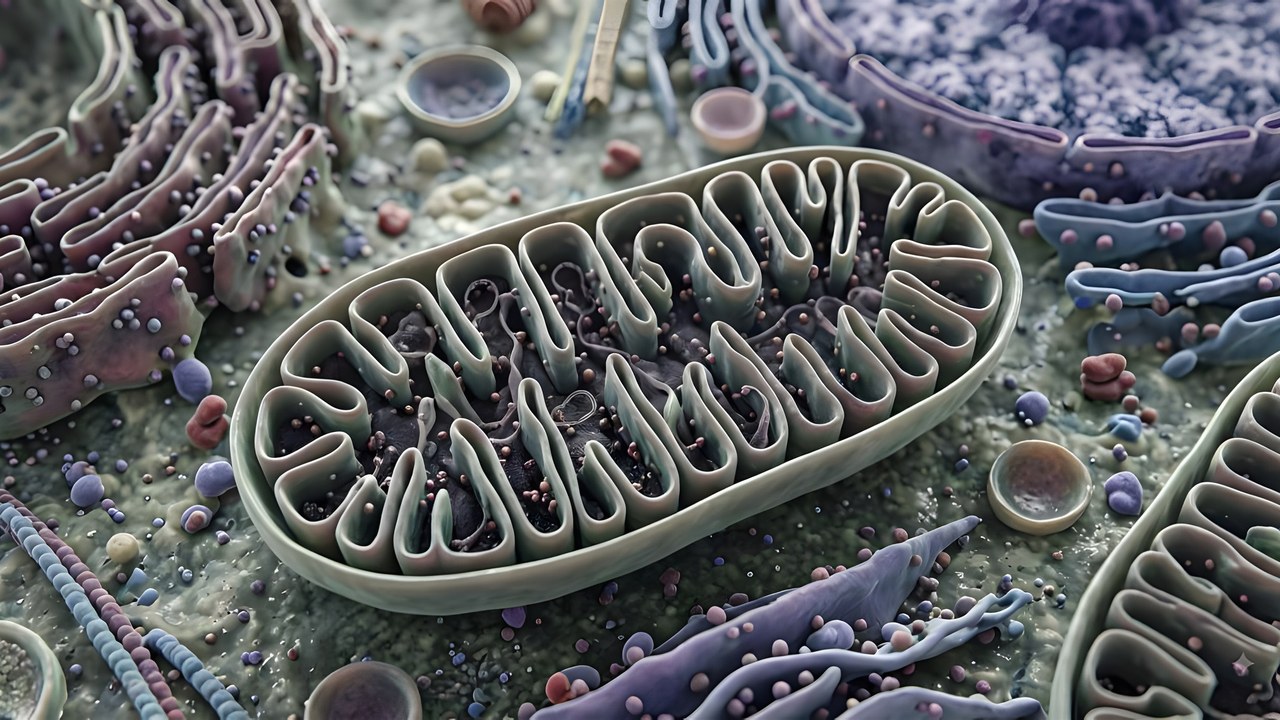
What we do about this mechanism. This is the hallmark with the most therapies pointing at it, because it is the one that shows up soonest in how someone feels: intravenous NAD+, PEMF, hyperbaric oxygen and clinical ozone all act on mitochondrial function through different routes. Which ones apply, and in what order, is decided at the consultation and not from a list.
Therapies that act here: IV therapy · PEMF therapy · Hyperbaric oxygen therapy · Ozone therapy
08
Cells that stop dividing but do not leave.
A damaged cell can stop dividing so it does not pass the damage on. That is useful. The problem is that it does not die either: it stays there, and it secretes inflammatory signals that affect its healthy neighbours.
A young body clears them. An ageing immune system clears fewer and fewer, and they accumulate. It is one of the clearest links between ageing and chronic inflammation.
What we do about this mechanism. You will read the word "senolytic" a lot, and it is worth being precise: what is published is that certain interventions reduce the load of these cells in specific populations, not that they clear them from your body. Hyperbaric oxygen and regenerative medicine act on this mechanism. We will show you the study and what it measured.
Therapies that act here: Hyperbaric oxygen therapy · Regenerative medicine · Functional nutrition
Integrative hallmarks
09
The body’s repair reserves running low.
Every tissue keeps a reserve of undifferentiated cells whose job is to replace what wears out. Skin, blood, gut and muscle all live off that reserve.
With age there are fewer of them and the ones left respond more slowly. It is why the same injury that healed in a week at thirty takes a month at seventy.
What we do about this mechanism. This is where regenerative medicine belongs, and where the most is promised across this industry. What we do is tell you which cell type, from what source, and what is documented about it. If your case is not a candidate, the evaluation is where you get told so.
Therapies that act here: Regenerative medicine · Hyperbaric oxygen therapy
10
Hormonal and immune signalling going out of tune.
Cells do not work alone. They talk through hormones, cytokines and vesicles, and that conversation is what keeps an organ behaving like an organ.
With age the conversation gets noisy: too much inflammatory signal, too little of the signal that used to keep order. Dysfunction stops being local and starts spreading between tissues.
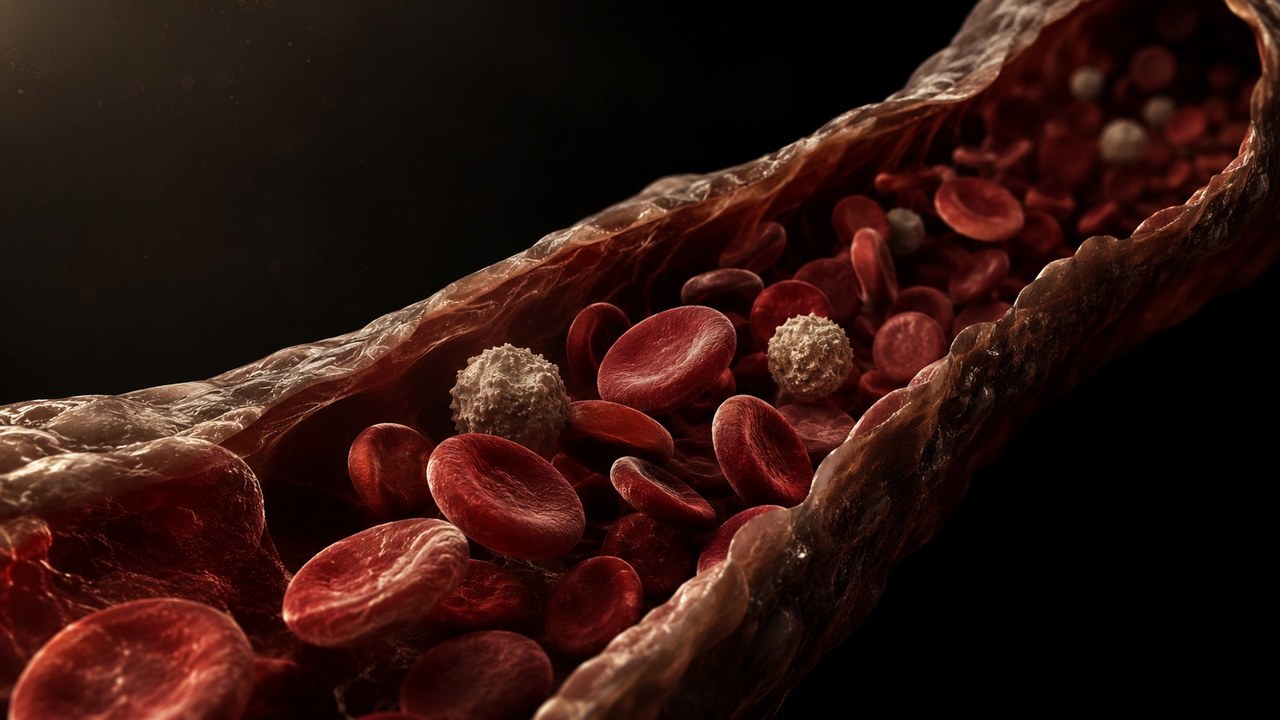
What we do about this mechanism. Bioidentical hormone therapy restores part of that signalling, and it only enters with labs in hand and a documented deficiency. Exosomes, within regenerative medicine, work on exactly this layer of communication.
Therapies that act here: Bioidentical hormone therapy · Regenerative medicine · Advanced diagnostics and patient mapping
11
A low, constant inflammatory fire, with no injury to justify it.
Acute inflammation is a repair mechanism and it ends when the job is done. What ageing brings is the other kind: low-grade, systemic and permanent, with nothing to heal.
It is called inflammaging and it is the common ground under cardiovascular disease, diabetes, arthritis and cognitive decline. It is also, in practice, the hallmark that most changes how a person feels day to day.
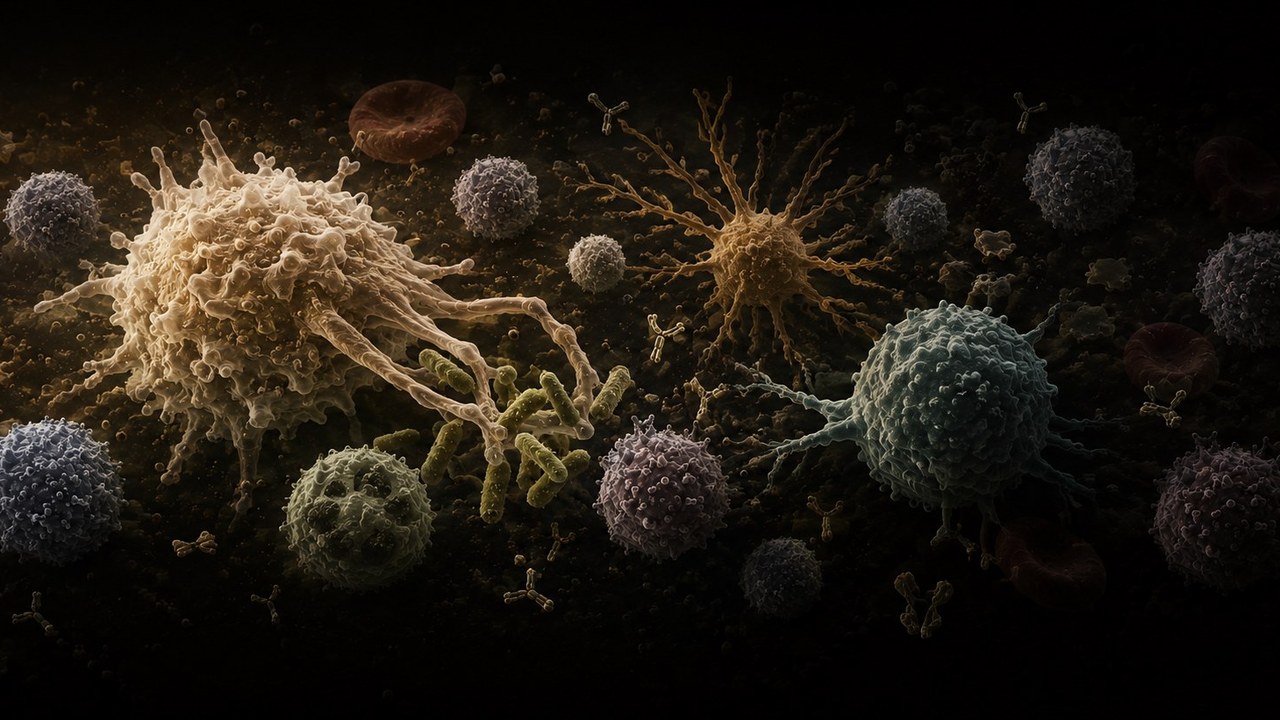
What we do about this mechanism. It is measurable: high-sensitivity CRP, IL-6, ferritin, among others. Several of the clinic’s therapies act on this mechanism, and it is the one where the change usually shows up soonest on labs. That measurement, before and after, is what separates a protocol from a story.
Therapies that act here: Ozone therapy · IV therapy · Hyperbaric oxygen therapy · PEMF therapy · Functional nutrition
12
An out-of-balance gut microbiome.
You carry more bacterial cells than human ones, and most of them live in the gut. They digest what you cannot, make vitamins and train the immune system, of which a large share sits in the intestinal wall.
When that population loses its balance, the gut barrier gets leaky and material crosses into the bloodstream that should not. The immune system responds, and that response is one of the sources of the chronic inflammation above.

What we do about this mechanism. It is assessed with stool and intestinal permeability testing, and it is worked on with food before supplements. It is the least spectacular hallmark on this list and one of the ones that changes most in the first months.
Therapies that act here: Functional nutrition · Advanced diagnostics and patient mapping
It is not a classification invented here. It is the framework published by López-Otín and colleagues in Cell, in 2013 and expanded in 2023, and it is the reference functional and regenerative medicine works from worldwide. Both papers are below, with their PubMed link so you can open them yourself.
None of these mechanisms is treated blind. The initial evaluation and advanced diagnostics are what tell us which of the twelve are moving in your case, and that result is what defines the plan. If there is nothing to treat, you get told that too.