Skip to content
The method12 hallmarks
Therapies Initial evaluationAdvanced diagnostics and patient mappingRegenerative medicineHyperbaric oxygen therapyIV therapyBioidentical hormone therapyOzone therapyPEMF therapyFunctional nutritionProtocol 360 See all therapies
Medical teamThe clinicYour tripContact Español Patient intake

Home / The method

Clinical reasoning

The method

Why this clinic combines three disciplines instead of practising one, and what that changes about your plan.

The starting point

Treat the cause, not the symptom.

Dr. Jorge Vázquez Parnass trained in functional medicine at Sanoviv Medical Institute, where he worked from 1999 to 2007 and ran the medical side for the last four years. That training changed how he understands disease: not treating symptoms from the compassionate side, but treating the patient from the medical side, looking for the root cause rather than only the surface.

In practice that means something very concrete. Before a therapy is proposed to you, somebody here has to know what is actually causing your condition. Not assume it. That is why diagnostics at this clinic run longer than at a wellness consultation, and it is why an evaluation can end with you not being a candidate for anything the clinic offers.

Functional medicine on its own is incomplete.

Functional medicine is the foundation, but on its own it does not go far enough. Combined with regenerative medicine and anti-aging medicine it becomes a far more complete system: one that does not just treat disease, but works to improve, prevent and regenerate. All three are practised here on the same patient and the same plan, not in three separate offices.

01

Functional medicine

This is the one that asks why. It reviews clinical history, habits, lab work and the body systems as a whole, to find the imbalance sitting underneath what you feel.

On its own it falls short. On its own it understands the problem well and has few tools to repair tissue that is already damaged.

02

Regenerative medicine

This is the one that repairs. It works with stem cells, exosomes, peptides and the therapies that give the body the signal and the material to rebuild.

On its own it falls short. On its own it repairs without correcting what caused the damage, so the problem tends to come back.

03

Anti-aging medicine

This is the one that sustains. It works on the processes of aging itself: hormones, mitochondria, inflammation, and the markers that shift with the years.

On its own it falls short. On its own it optimizes a person whose cause nobody looked for and whose damage nobody repaired.

Genetics and epigenetics.

We now know that diet, sleep, exercise, stress and relationships all matter. That part is said everywhere. What is almost never said is that the genome matters too, and that gene expression can be modulated.

There is a functional map of roughly 26,000 human genes and a growing ability to act on how they are expressed, which is what the hallmarks of aging are about. That is the piece almost no wellness clinic touches, and it is central to how a plan is designed at BMC.

It is worth saying what this is not. Your DNA is not modified and no change to your genetics is promised. What is studied is which variants you carry and what they mean for your nutrition, your supplementation and your therapy plan. What gets modulated is expression, not the gene.
Ordered clinical archive, files on a shelf
Illustrative image.

Diagnostics

Past the basic lab panel.

A plan built on a routine blood panel is a plan built on assumptions. These are the studies used here to build the patient map. Which ones are ordered depends on your case; not everyone gets all of them.

  • Genetic panels. Variants related to metabolism, detoxification, nutrient response and the processes of aging.
  • Food allergy and intolerance panel. What your body is handling badly every day without you connecting it to how you feel.
  • Cancer markers. Screening studies, as part of the general health map. BMC Clinic does not treat cancer, and an abnormal marker is referred to an oncologist rather than treated here.
  • Ultrasound and imaging. Ultrasound and imaging studies including MRI, when the case calls for it.
  • Advanced laboratory work. Hormonal, inflammatory and metabolic profiles that do not come in a standard check-up.
  • Comprehensive patient mapping. The step where all of the above meets your clinical history and becomes a written plan.

Two to three weeks, in writing, before you buy tickets.

A typical treatment plan runs two to three weeks. It is not a single session: it is a sequence, with the therapies in the order that makes clinical sense and the number of sessions defined from the start.

If you live in Tijuana or Baja California, follow-up is scheduled weekly or every two weeks. If you are travelling in, the full calendar is handed to you before you book flights and lodging, because a plan you only half know is a trip you plan badly.

See how the trip is organized

From the first day to the full protocol, one piece at a time.

A plan is built from these pieces. They are listed here in catalog order, and each has its own sheet: what happens in the session, who it is considered for and when it does not apply.

  1. Initial evaluation

    The consultation everything starts with. No therapy is given without it.

    • First visit
    • 60 to 90 minutes
    See the full sheet
    Initial evaluation, illustrative image
    Illustrative image.
  2. Advanced diagnostics and patient mapping

    The studies used to find the cause before any therapy is proposed. Includes genetic panels and food allergy panels.

    • Genetics · laboratory · imaging
    • Days to two weeks, depending on the study
    See the full sheet
    Advanced diagnostics and patient mapping, illustrative image
    Illustrative image.
  3. Regenerative medicine

    Stem cells, exosomes, secretomes and peptides, applied under medical criteria and with a written indication.

    • Stem cells and exosomes
    • 1 to 3 hours depending on how it is administered
    See the full sheet
    Regenerative medicine, illustrative image
    Illustrative image.
  4. Hyperbaric oxygen therapy

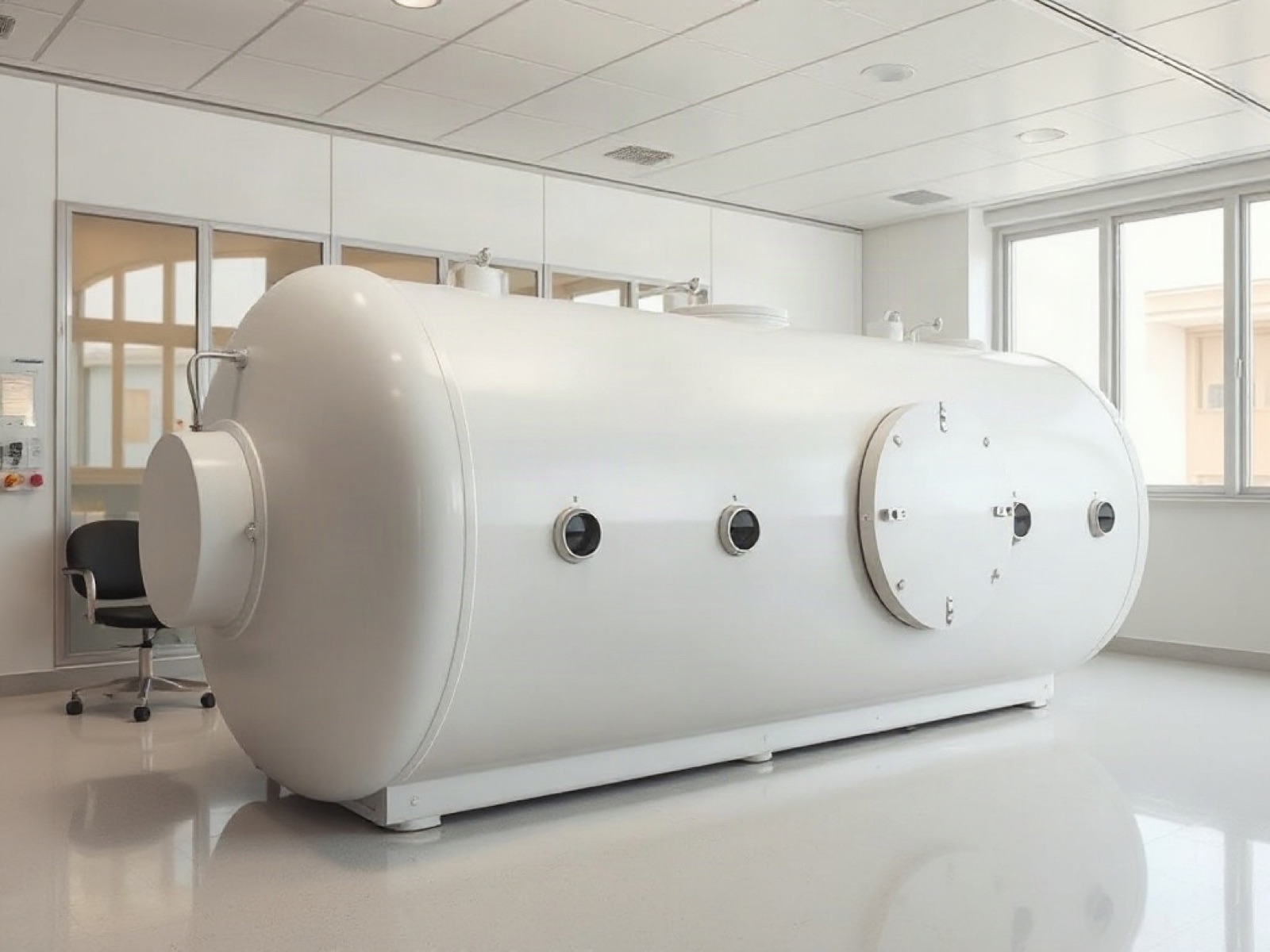
    Pressurized oxygen in a multiplace chamber. The therapy with the longest documented clinical record in the clinic.

    • Multiplace chamber · 2 ATA
    • 60 to 90 minutes per session
    See the full sheet
    Hyperbaric oxygen therapy, illustrative image
    Illustrative image.
  5. IV therapy

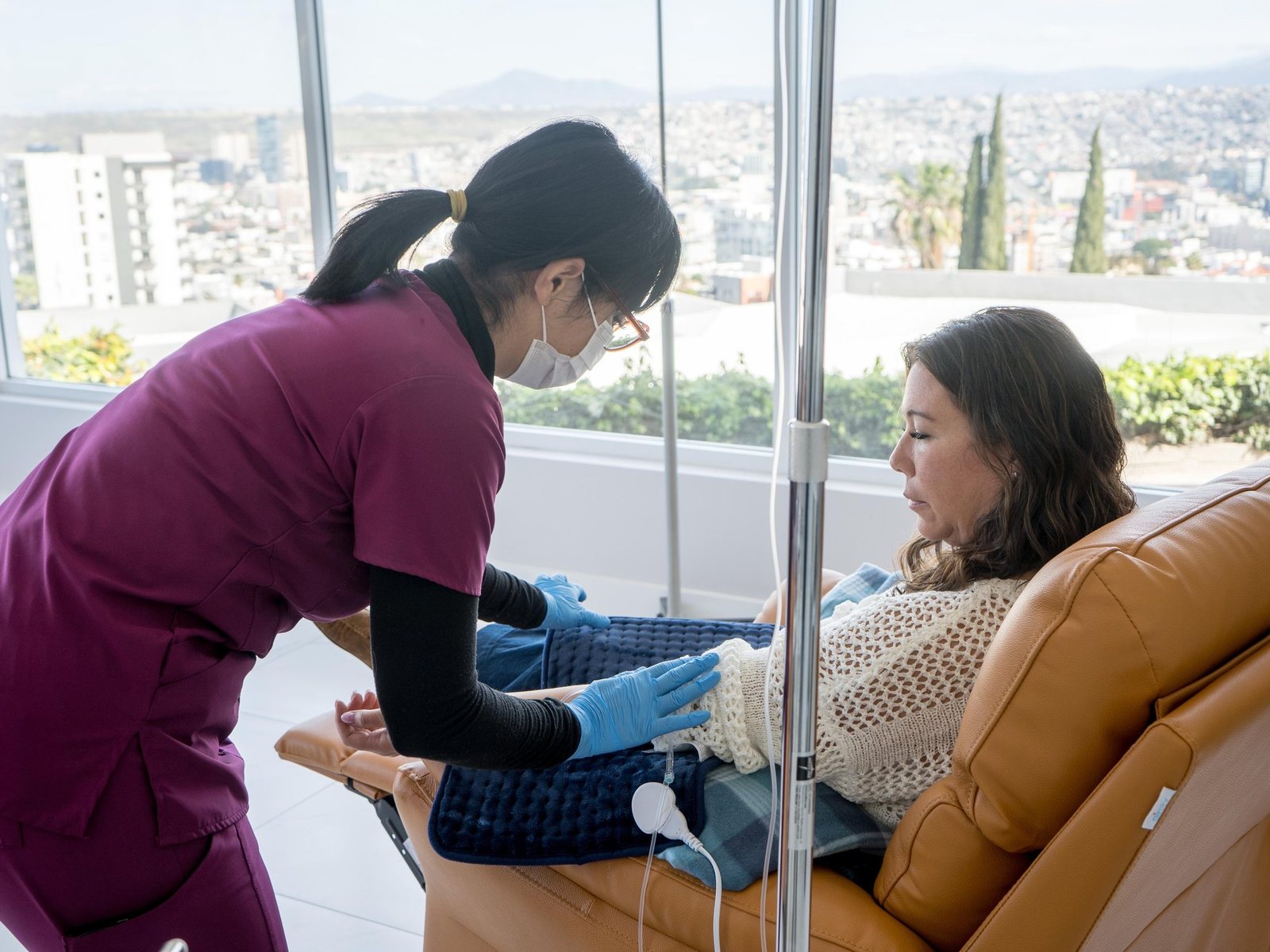
    Infusions formulated on medical indication: NAD+, coenzyme Q10, glutathione, alpha lipoic acid, vitamin C and the Myers cocktail.

    • NAD+, glutathione, vitamin C
    • 45 minutes to 4 hours depending on the formula
    See the full sheet
    IV therapy, photograph of the clinic
    Photograph of BMC Clinic.
  6. Bioidentical hormone therapy

    Hormone replacement with molecules identical to the body own, prescribed from lab work and never from symptoms alone.

    • BHRT
    • 45-minute consultation, plus lab follow-up
    See the full sheet
    Bioidentical hormone therapy, illustrative image
    Illustrative image.
  7. Ozone therapy

    Medical ozone, systemic or local, in measured doses from a calibrated generator.

    • Medical ozone
    • 30 to 60 minutes
    See the full sheet
    Ozone therapy, illustrative image
    Illustrative image.
  8. PEMF therapy

    Pulsed electromagnetic fields applied to one area or to the whole body. Non-invasive and needle-free.

    • Pulsed electromagnetic fields
    • 20 to 40 minutes
    See the full sheet
    PEMF therapy, illustrative image
    Illustrative image.
  9. Functional nutrition

    An eating plan built on your lab work and your real routine, not on a printed diet.

    • Nutrition consultation
    • 60 minutes for the first consultation
    See the full sheet
    Functional nutrition, illustrative image
    Illustrative image.
  10. Protocol 360

    The program that puts several therapies into a single sequence, for patients who travel in with a fixed number of days.

    • Comprehensive program
    • 5 to 15 days, depending on the plan
    See the full sheet
    Protocol 360, illustrative image
    Illustrative image.

"We are not just trying to help people feel better. We are trying to help them get to 150."

Dr. Jorge Vázquez Parnass, Medical Director, BMC Clinic

He says it half-jokingly and he means it entirely seriously. It is the ambition that organizes the clinic: not managing symptoms, but working on the processes that decide how many functional years a person has left.

And it is worth saying what that sentence is not. It is not a promise, not his and not anyone else. No therapy at this clinic guarantees a result, the response varies between people, and anyone who guarantees you years of life is selling you something. It is the direction of the work, not a commitment to an arrival.

The method starts with the evaluation.

It is the consultation where your history is reviewed, the studies you need are decided, and it is determined whether any of the therapies makes sense in your case. It can be done by video call before you travel.